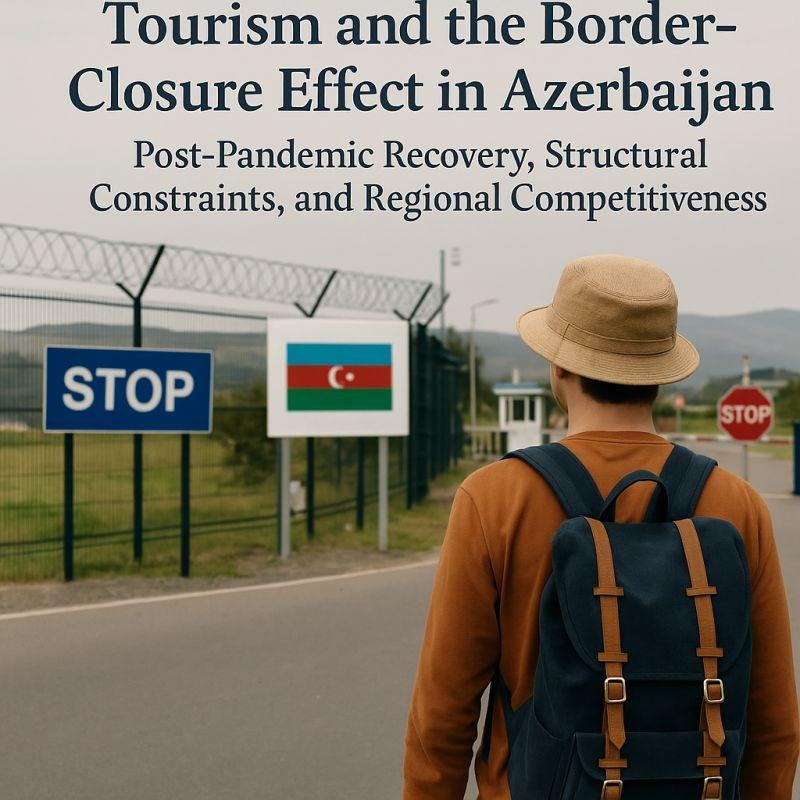
Tourism and the Border-Closure Effect in Azerbaijan: Post-Pandemic Recovery, Structural Constraints, and Regional Competitiveness
AbstractThis study examines the evolution of Azerbaijan's tourism sector in the aftermath of the COVID-19 pandemic, focusing on the economic and policy consequences of prolonged land-border closures. Drawing on official statistics, international datasets, and comparative analysis with Georgia and Armenia, the paper investigates trends in inbound tourism, revenue generation, employment, and investment across 2016-2024. The findings reveal that while the sector has demonstrated signs of recovery-particularly through growth in higher-value and diversified visitor segments-Azerbaijan's performance remains significantly below pre-pandemic levels and lags behind regional peers. The analysis identifies structural inefficiencies, methodological weaknesses in statistical reporting, and policy misalignments that constrain sectoral growth. It concludes that restrictive border and mobility policies are incompatible with Azerbaijan's stated objectives of tourism-led diversification and sustainable development.
Keywords:
Azerbaijan; tourism policy; COVID-19 recovery; border closure; non-oil economy; South Caucasus; UNWTO standards; economic diversification
Download pdf file